
Electronic Dance Music has undergone one of its most dramatic transformations in the past ten years. From the dominance of massive festival anthems and radio-friendly pop collaborations in the early 2010s, EDM has splintered into dozens of competing subgenres, embraced underground techno and house, experienced a pandemic-driven pivot to virtual events, and now stands at the forefront of AI-powered music production. The genre that once had a singular “sound” is now defined by its refusal to be contained by genre boundaries.
2014-2016: The Golden Age of Festival EDM
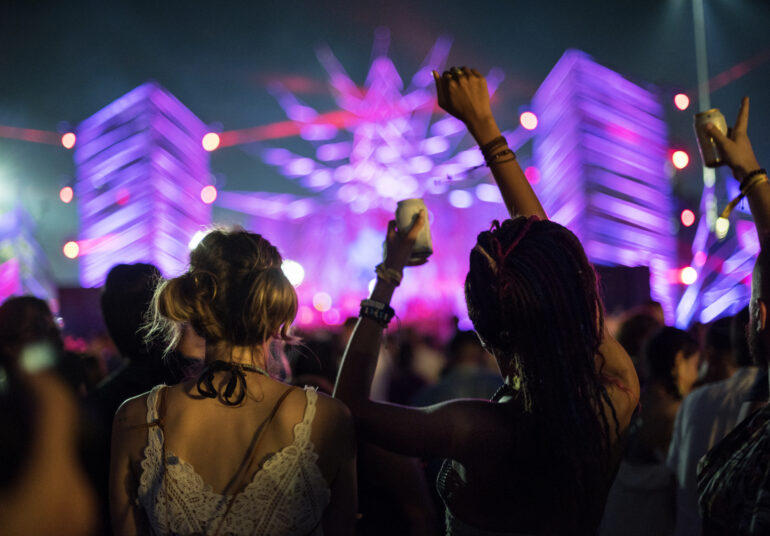
Step back to 2014. EDM was at its absolute cultural peak. Calvin Harris, David Guetta, Avicii, Tiësto, and Swedish House Mafia dominated radio stations worldwide. “Animals,” “One Million Voices,” “Wake Me Up,” and “Titanium” were ubiquitous. Festival culture exploded. Tomorrowland, Ultra Music Festival, and Electric Daisy Carnival were growing into global phenomena, attracting hundreds of thousands. The sound was consistent: massive buildups, explosive drop moments, euphoric melodies, and infectious energy designed specifically for festival crowds.
This era defined what most people still think of when they hear “EDM.” Big Room House dominated main stages. Progressive House built tension methodically. Electro House threw down hard synth stabs. Dubstep provided aggressive bass. The production was relatively straightforward: find a catchy melody, build anticipation, drop the beat. Radio stations loved it. Pop audiences discovered it. EDM wasn’t underground anymore—it was a $7.1 billion industry by 2016, according to Forbes.
Festival anthems with massive drops, collaboration with mainstream pop stars, radio-friendly melodies, euphoric energy, obvious verse-chorus-drop song structure
2017-2019: The Great Diversification
Around 2015-2016, producers noticed something: Big Room House was getting boring. Audiences craved something different. The result? An explosion of competing subgenres that fragmented EDM into a thousand pieces. Future House emerged, blending house music with futuristic, ethereal synths. Deep House offered smooth, soulful grooves perfect for late-night listening. Trap exploded when producers realized they could fuse hip-hop rhythms with electronic production. Future Bass introduced bright, melodic synths over trap-influenced drums. Tech House began gaining underground credibility, focusing on groove and minimalism rather than stadium drops.
This diversification was revolutionary. EDM stopped being one thing. Artists like Marshmello and The Chainsmokers continued pop collaborations, but simultaneously, artists like Fisher and John Summit brought underground sounds to mainstages. Streaming platforms accelerated this fragmentation. Spotify and Apple Music algorithms recommended niche subgenres to listeners interested in discovering new sounds. TikTok emerged as a breakthrough platform—short-form video clips could make entire songs go viral without radio play. A track didn’t need to be a three-minute pop song anymore; a 30-second clip could make it famous.
Production technology democratized. Software like Ableton Live, FL Studio, and Serum became affordable and powerful. YouTube tutorials made production accessible. Bedroom producers worldwide could now create professional-quality tracks from laptops. The barrier to entry collapsed. Instead of needing expensive hardware and a recording studio, all you needed was a computer and internet access.
Genre fragmentation, future bass brightness, trap’s hip-hop fusion, deep house soulfulness, tech house groove minimalism, streaming algorithm discovery
2020-2022: The Pandemic Pivot
Then 2020 happened. Suddenly, festivals couldn’t happen. Clubs closed. The entire EDM ecosystem—built on physical gatherings—faced an existential crisis. The response was creative desperation. Virtual festivals emerged. Tomorrowland’s 2020 digital event attracted 1 million remote participants from 150+ countries. Artists performed from empty venues or home studios. Twitch became a concert platform. Instagram Live DJ sets became normal. Fortnite and VRChat hosted electronic music events with avatars dancing together in digital spaces.
This forced innovation transformed production methods. Remote collaboration tools allowed artists to create together without physical proximity. Producers working from home had time to experiment. The pandemic actually accelerated sonic innovation because artists had space to think differently. Live performances evolved too. When artists couldn’t tour, they invested in audiovisual setups, modular synthesizers, and live production elements that made performances feel special even when streamed.
By 2022, as vaccines rolled out and festivals returned, the experience had fundamentally shifted. Tomorrowland came back with reduced capacity, vaccination requirements, and increased production value. EDC Thailand happened for the first time. The global festival circuit that had concentrated around Europe and the United States began diversifying. Asia, Latin America, and the Middle East developed their own scenes. Local artists added traditional instruments, cultural rhythms, and vocal styles to electronic beats, creating sounds that felt both globally modern and locally rooted.
Virtual festivals, livestreaming, remote collaboration, home studio experimentation, audiovisual performance evolution, global diversification of sounds and scenes
2023-2024: Tech House Dominance and Return to Roots
Fast forward to today. The “hot sound” of 2024 is tech house—that deep, groove-oriented, minimalist fusion that was underground for years. Artists like Fisher, John Summit, and Chris Lake brought tech house to mainstream festival stages. The euphoric, melodic sound of the early 2010s feels dated now. Current festival lineups feature more balance: techno legends like Amelie Lens and Kevin de Vries on major stages alongside pop crossover acts. Deep house and underground acid never really disappeared; they resurged as newer fans discovered them.
A fascinating parallel revival happened: younger producers and DJs started exploring the roots. Disco, classic house, techno minimalism—the sounds that EDM was originally built on—came back into focus. This wasn’t nostalgia; it was respect. Artists realized that the underground was richer and more interesting than the mainstream pop-collaboration treadmill many had been on. Some of EDM’s biggest names took years off to reconnect with their original passion. Others reinvented themselves entirely.
The Numbers: By 2024, Tomorrowland Belgium hosted around 400,000 attendees across two weekends. EDC evolved from a single two-day event into global productions on multiple continents. But the real growth happened in underground scenes—micro-festivals, local events, and grassroots communities grew faster than mainstream festival culture.
Production Technology: From Software to AI
Perhaps the biggest shift is technological. Software synthesizers like Serum and Omnisphere became industry standards, allowing sound design that wasn’t possible ten years ago. Producers could create sounds more complex, more precise, more experimental. But the real frontier now is artificial intelligence and machine learning. AI-powered tools assist in beat generation, melody creation, and mixing. These aren’t replacing human creativity—they’re expanding possibilities. A producer can now ask an algorithm to generate beat variations or suggest harmonic progressions, freeing them to focus on the emotional and creative aspects.
Modular synthesizers experienced an unexpected resurgence. In an era of digital everything, analog synthesis offers tactile, experimental approaches. Artists like Richie Hawtin and Charlotte de Witte brought live modular synthesis into performances, creating unpredictable moments that streaming and files can’t capture. The future isn’t choosing between analog and digital—it’s combining both.
The Sound Evolution: What’s Actually Different
Early 2010s EDM prioritized euphoria and obviousness. The melody was immediate. The drop was unmissable. The energy relentless. Current EDM is more sophisticated and less emotional. The grooves are deeper, the sound design more intricate, the energy more sustainable. You might dance for eight hours to tech house without the emotional peaks and valleys of Big Room House. The production quality is objectively better—mixing, mastering, sound design are all more refined. But listeners often say it feels “less fun” than the early 2010s. The current sound is technically superior but emotionally restrained.
Genre boundaries completely dissolved. An artist might release progressive house one week and trap the next. Remixes blend genres unrecognizably. Collaborations feature unexpected combinations—K-pop stars with EDM DJs, reggaeton beats with house production, hip-hop samples with techno structures. The term “EDM” itself became outdated. Producers rarely identify by single genres anymore; they’re just “electronic producers” making whatever feels right.
The Biggest Change: EDM went from having a unified “sound” to having no singular sound at all. It splintered into dozens of legitimate subgenres, each with dedicated communities, festivals, and global followings. The genre expanded by fragmenting.
Festival Culture: Bigger, But Fractured
Festivals grew in scale and number but became more specialized. Instead of one “EDM festival,” now there’s a festival for tech house, for underground techno, for future bass, for trap, for drum and bass. Tomorrowland and Ultra remain massive, but they no longer define EDM culture. Regional festivals matter more. Grassroots events in smaller cities attract passionate audiences. Sustainability became a major focus—festivals now highlight solar power, reduced plastic, and eco-friendly practices. Wellness areas appear at major festivals. Attendees expect meditation zones, sober-friendly spaces, and mental health support alongside the dancefloor intensity.
Live streaming permanently changed festival dynamics. Fans expect their favorite sets to be available online within hours. Multi-camera angles, backstage access, artist interviews become standard. This democratized festival access—someone in Bangkok can watch Tomorrowland Belgium in real time. But it also changed the energy. Performers are constantly aware they’re being recorded and shared globally, which shifts how they perform.
What Doesn’t Change: The Community
Despite everything—the sound, the technology, the business model—one thing remained constant: the community. Electronic music attracts people seeking connection, freedom of expression, and escape from the mundane. Whether it’s 1990 at a warehouse rave or 2024 at a 400,000-person festival, the core appeal is the same. Music bringing strangers together, removing social boundaries, creating transcendent moments. That magic didn’t change. If anything, it deepened.
The past decade of EDM’s evolution reflects broader cultural shifts. Technology became more accessible, leading to democratization of production. Global connectivity increased, leading to diverse sounds and international influence. The pandemic forced adaptation, accelerating digital innovation. Climate awareness became mainstream, demanding sustainability. AI emerged as a creative tool. Through it all, producers and fans evolved together, pushing boundaries, rejecting gatekeeping, embracing experimentation. EDM in 2024 is more diverse, technically refined, and creatively ambitious than it’s ever been. The genre didn’t stagnate or decline—it multiplied into thousands of possibilities.