

Few cities have wielded as much cultural influence over entertainment as Miami. The city’s electrifying nightlife, neon-saturated streets, and thriving electronic music scene defined 1980s pop culture through television, fundamentally transformed video gaming through interactive soundtracks, and continues shaping how contemporary audiences experience music within digital environments. This is the untold story of how one American city’s sonic identity influenced millions worldwide.
Miami Vice: When Electronic Music Dominated Mainstream Television
Miami Vice premiered on NBC on September 16, 1984, and became an immediate cultural phenomenon that changed television forever. The crime drama, created by Anthony Yerkovich and produced by Michael Mann, depicted Miami’s real cocaine wars through an unprecedented visual and sonic lens. Unlike contemporary cop shows such as Hill Street Blues and Cagney & Lacey, which emphasized gritty realism and social commentary, Miami Vice embraced stylization, vibrant colors, and high production budgets unheard of for television at the time. Producer Michael Mann famously rejected earth tones, instead demanding colors that had never appeared on American television. The result? A show that looked like an extended music video, which was entirely intentional. Creator Anthony Yerkovich explicitly designed the series around MTV culture and music video aesthetics, long before that concept became standard practice in prestige television.
But Miami Vice’s greatest innovation wasn’t visual—it was auditory. Composer Jan Hammer, a synthesizer virtuoso who fled Czechoslovakia after the Soviet invasion of 1968, brought his electronic mastery to the series. Hammer didn’t simply compose underscore; he created 45 original scores that made synthesizers the primary narrative instrument. Rather than traditional orchestral strings, viewers heard bright, piercing synth pads conveying danger. Instead of conventional brass sections, pulsing electronic basslines created propulsive energy. Warm, shimmering synthesizer chords delivered emotional resonance that felt simultaneously futuristic and vulnerable. This approach to score composition was revolutionary. Most television composers of the 1980s still relied on traditional orchestration principles. Hammer proved that electronic instruments could match—and exceed—traditional orchestras in emotional depth and storytelling power.
🏆 The Miami Vice Phenomenon:Jan Hammer’s Miami Vice soundtrack album debuted at number one on the Billboard 200 in October 1985 and remained there for eleven consecutive weeks. The album ultimately sold four million copies by February 1986, making it the most successful television soundtrack of all time—a record that stood until High School Musical dethroned it in 2006. Hammer’s iconic “Miami Vice Theme” reached number one on the Billboard Hot 100 singles chart in 1985 (the last instrumental to achieve this until “Harlem Shake” in 2013) and won Grammy Awards for Best Instrumental Performance and Best Pop Instrumental Performance in 1986.
The show’s innovative music strategy extended beyond Hammer’s original compositions. Director Michael Mann revolutionized television’s approach to licensed music by treating songs as narrative devices rather than background filler. Glenn Frey’s “Smuggler’s Blues,” Phil Collins’ “In The Air Tonight,” and Tina Turner’s “Better Be Good To Me” appeared in scenes specifically constructed around them, with songs and visuals commenting on each other in operatic fashion. This technique—now standard in prestige television through shows like The Sopranos and Stranger Things—originated with Miami Vice. The show proved that music wasn’t merely accompaniment; it was story, it was atmosphere, it was the thing that made the audience feel what the characters felt.
GTA Vice City: When Video Games Discovered Licensed Music (2002)
Eighteen years after Miami Vice premiered, Rockstar Games released Grand Theft Auto: Vice City for PlayStation 2. While Grand Theft Auto III had introduced open-world sandbox gameplay to mainstream audiences in 2001, Vice City elevated the formula by deliberately channeling Miami Vice’s aesthetic and sonic sensibility. Set in a fictionalized Miami during 1986, the game reproduced not just the city’s visual character but its entire musical ecosystem. Where previous GTA titles relied primarily on original compositions and licensed pop songs scattered throughout the soundtrack, Vice City pursued an audacious strategy: it would license over 100 songs from authentic 1980s artists and organize them into nine in-game radio stations, each curated to represent distinct musical subgenres.
The nine radio stations were meticulously designed with specific purpose. Wildstyle featured hip-hop and electro from artists like Grandmaster Flash and Afrika Bambaataa. Flash FM played pop hits including Michael Jackson’s “Billie Jean,” which plays the moment players enter their first vehicle, immediately establishing the game’s nostalgic 1980s atmosphere. Fever 105 specialized in soul, disco, and funk—Earth Wind & Fire, Teena Marie, and Kilo. V-Rock delivered hard rock and heavy metal with Iron Maiden, Judas Priest, and Twisted Sister. Radio Espantoso played Latin jazz and salsa. Emotion 98.3 offered soft rock and ballads, including Jan Hammer’s “Crockett’s Theme” directly from Miami Vice. Wave 103 featured the synthwave and new wave that would shape the game’s entire aesthetic—Frankie Goes to Hollywood, Talking Heads, A Flock of Seagulls, Blondie. The sheer breadth and curation of the soundtrack was unprecedented in gaming.
💿 Why Vice City’s Soundtrack Changed Everything:Vice City wasn’t simply a game that featured licensed music. It demonstrated that the right soundtrack could become the primary reason players engaged with a game world. Players would often skip missions simply to continue driving through Vice City’s neon-soaked streets while listening to Hall & Oates, Blondie, or Michael Jackson. The music transformed the act of driving through a virtual city into something genuinely meditative and emotionally resonant.
The cultural impact proved massive. The game sold 17 million copies worldwide and became one of the best-selling games of all time. More significantly, Vice City demonstrated that music could serve as the emotional core of an interactive experience. Contemporary games like Tony Hawk’s Pro Skater had proven that licensed soundtracks could enhance gameplay, but Vice City proved something more radical: the right soundtrack could *become* the experience. Players didn’t primarily engage with Vice City to complete missions or achieve objectives. They engaged with it to inhabit a sonic environment—to exist inside 1980s Miami through the cars they stole, the streets they drove, and the radio stations they listened to. In this sense, Vice City was less a video game than it was a fully interactive time machine, powered entirely by music.
The Synthwave Renaissance: How Vice City Created a Genre
Grand Theft Auto: Vice City released in 2002. Synthwave—the electronic genre characterized by 1980s synthesizer tones, driving basslines, pulsing drum machines, and neon aesthetic—didn’t emerge as a cohesive genre until the mid-2000s. This timing is not coincidental. According to Wikipedia’s analysis of synthwave’s origins, the genre “developed in the mid-to-late 2000s through French house producers, as well as younger artists who were inspired by the 2002 video game Grand Theft Auto: Vice City.” Players who grew up with Vice City’s soundtrack internalized 1980s electronic music as the default aesthetic for cool, dangerous, futuristic narratives. When those players became musicians and producers in their twenties, they didn’t create synthwave because they remembered the 1980s firsthand; they created synthwave because they remembered Vice City.
The chain of cultural causality extends further. The 2011 film Drive, directed by Nicolas Winding Refn, deployed synthwave aesthetics and a synthwave-influenced soundtrack to create its neon-soaked depiction of Los Angeles. Many contemporary synthwave artists credit both Vice City and Drive as direct influences. Hotline Miami, released in 2012, was an indie video game that deliberately channeled Vice City’s aesthetic through synthwave audio. Netflix’s Stranger Things (2016), The Midnight, Carpenter Brut, and dozens of other contemporary cultural phenomena trace aesthetic lineage directly back to Vice City’s curation of 1980s music within a 1980s-inspired setting. What began as Rockstar Games’ business decision to license 100+ songs has rippled across multiple decades, multiple media formats, and shaped how contemporary audiences experience 1980s nostalgia.
The Weeknd’s “Blinding Lights” and Vice City’s Generational Impact
In 2020, The Weeknd released “Blinding Lights,” a synthwave-influenced pop song that became the most-streamed song of 2020, the number-one global track of the year, and The Weeknd’s breakthrough into mainstream superstardom. The production heavily emphasized 1980s synthwave elements: bright, piercing synth pads, pulsing electronic drums, warm synthesizer melodies reminiscent of Jan Hammer’s Miami Vice work. When asked about the song’s influences in a 2021 Billboard interview, The Weeknd explained: “GTA Vice City really opened my eyes to a lot of 80s music, so there was a nostalgia for when I was a kid playing video games and listening to Hall & Oates and Michael Jackson while driving through the city. That’s embedded in my musical DNA.”
This statement is crucial. The Weeknd was born in 1990. He never experienced the 1980s firsthand. His relationship with 1980s music is entirely mediated through Vice City—through video game radio stations curated by people he’s never met, playing songs they selected because those songs captured 1980s Miami. Yet Vice City’s soundtrack proved so powerful that it shaped his fundamental aesthetic sensibility. “Blinding Lights” topped global charts, introducing millions to synthwave aesthetics, and that chart dominance traces directly back to a video game’s music selection. This is unprecedented in popular culture: a video game soundtrack influencing mainstream pop in such a measurable, traceable way.
GTA 6: Vice City’s Return and Electronic Music’s Future in Gaming
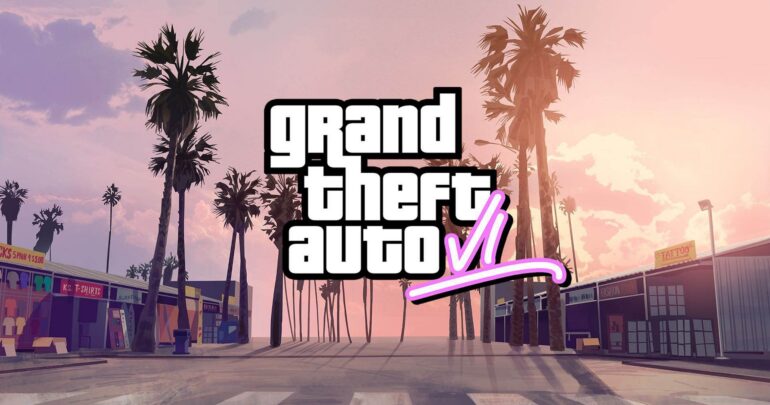
Grand Theft Auto 6 returns to Miami in 2025, marking the franchise’s first return to Vice City since the 2002 original (excluding the 2012 remaster). Promotional materials feature electronic music and synthwave vibes. The radio station V-Rock—appearing in the original Vice City—has been confirmed for GTA 6. Speculation within gaming communities suggests contemporary electronic music, modern synthwave artists, and Miami’s current EDM scene will all feature prominently. Rockstar Games’ commitment to music-centric gameplay continues through GTA 6, with company statements emphasizing that the soundtrack will “play an essential role” in the player experience.
What’s remarkable is that Miami’s electronic music influence hasn’t diminished after two decades. If anything, it has intensified. The city remains a global center for EDM production and electronic music culture. Revolution 93.5, a Miami dance music radio station, represents the city’s ongoing commitment to electronic culture. Contemporary Miami producers, DJs, and electronic artists continue the legacy that Jan Hammer and Miami Vice established in 1984. Yet gaming remains the most visible channel through which Miami’s sonic identity reaches global audiences. GTA 6’s approaching release suggests that Miami’s influence on interactive entertainment—through music, aesthetic, and narrative—will only deepen.
The Complete Cycle:Miami’s 1980s electronic culture (Miami Vice) inspired a video game soundtrack (GTA Vice City), which influenced a musical genre (synthwave), which shaped contemporary pop music (The Weeknd’s “Blinding Lights”), which reached billions globally. The city’s sonic DNA continues through GTA 6, proving that Miami’s influence on electronic culture remains unmatched in contemporary entertainment. Few cities have achieved this level of lasting, measurable impact on interactive entertainment and global pop culture.
From Jan Hammer’s groundbreaking synthesizer work on Miami Vice in 1984 to The Weeknd’s “Blinding Lights” topping 2020 global charts, Miami’s electronic music culture has fundamentally shaped how contemporary audiences experience rhythm, melody, and nostalgia. Grand Theft Auto: Vice City served as the crucial bridge between 1980s electronic music and contemporary listeners who never experienced that era firsthand. As GTA 6 approaches, the cycle continues—Miami’s neon-soaked, synthwave-saturated aesthetic returning to interactive entertainment, introducing a new generation to the city’s unmatched sonic influence. Few cities have wielded such profound, lasting power over global popular culture. Miami’s story is ultimately a story about how place—through music, through aesthetic, through the particular alchemy of crime and neon and electronic sound—can reach across decades and continents to shape the imaginations of millions.